Threat actors are now relying on agentic workflows powered by AI-based offensive frameworks to automate vulnerability discovery and exploitation, accelerating attacks to machine speed.
The U.S. government has disrupted a North Korean social engineering campaign called 'FaceStealer', responsible for stealing more than $400 million in cryptocurrency.
Despite longstanding concerns about the Kremlin’s access to the app’s data, NATO on Thursday issued guidance suggesting attendees of its flagship defense industry conference use the Russian-owned Yandex Go to reach the venue.
A new campaign dubbed 'wfx-loot' has unfolded on GitHub where threat actors used 4,837 compromised accounts to probe 61,764 repositories, open pull requests, and push secrets-stealing malware.
A critical vulnerability in the HTTP/2 module of Apache HTTP Server could be exploited by an unauthenticated attacker to obtain remote code execution (RCE).
Certificate authority eMudhra has revoked eight additional intermediate CA certificates after an investigation into its recent certificate security incident found improper handling of private keys during the certificate-generation process.
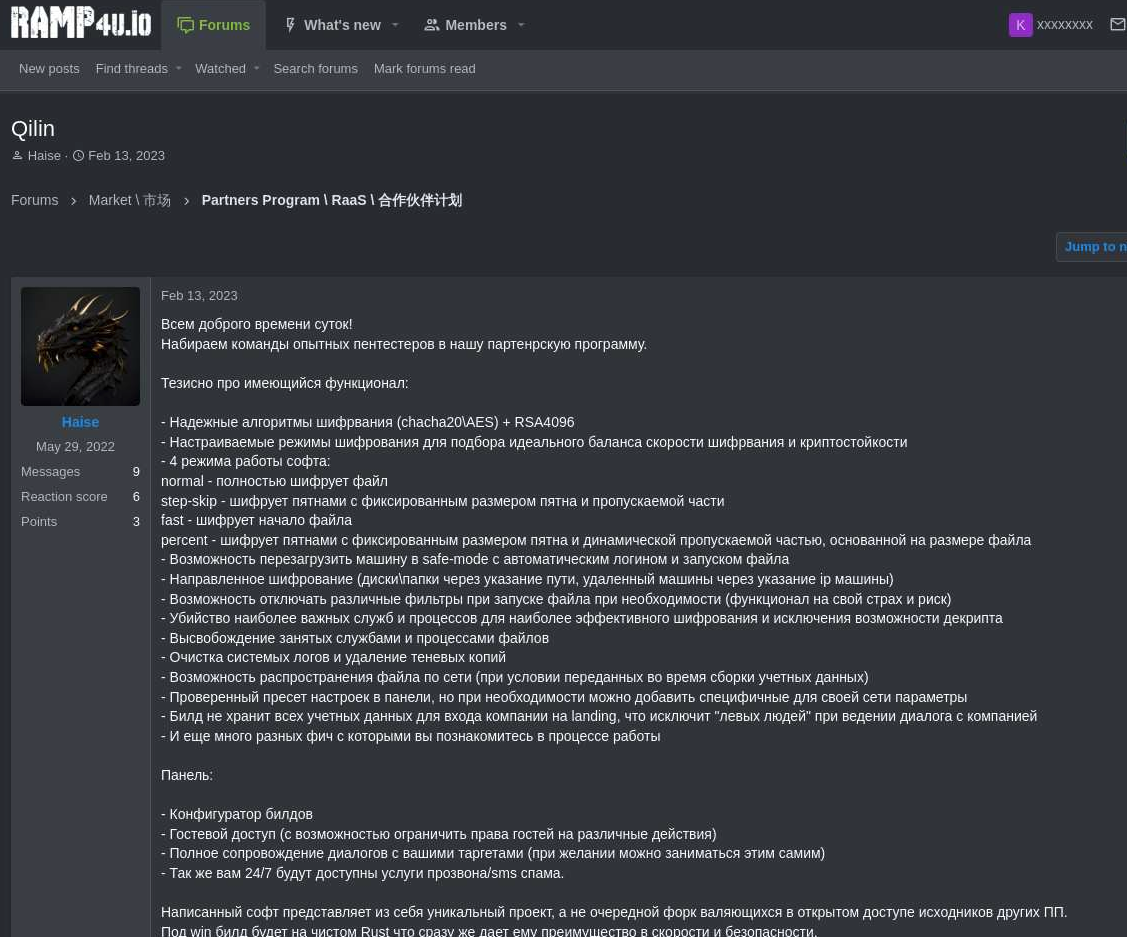
The cybercrime group Qilin has emerged as the world's most active ransomware affiliate program, claiming at least 365 victim organizations in the past three months alone. But even top Russian hackers make operational security mistakes, and…
Linux eBPF rootkits can hide malicious activity and evade traditional detection methods without loading kernel modules. Flare reveals how these techniques are spreading through underground forums, where threat actors are sharing rootkit…
Microsoft did another four-digit patch drop today, releasing updates to fix almost 1,100 security vulnerabilities in its Windows operating systems and supported software. This month's Patch Tuesday addresses 63 critical flaws -- including…
Today is Microsoft's November 2026 Patch Tuesday, with security updates addressing a record-breaking 1,235 flaws, including one actively exploited Microsoft Outlook zero-day vulnerability.
Microsoft has released the Patch Tuesday Windows 11 and cumulative updates for versions 26H2/25H2/24H2 and 23H2 to fix security vulnerabilities and bugs, and add new features.
Cybercriminals are infecting devices on a large scale with spyware, increasingly compromising systems belonging to average people, according to a new report.
Google has released emergency security updates to patch a new Chrome vulnerability exploited in zero-day attacks, the eighth such flaw since the start of the year.
AI infrastructure startup Fireworks has disclosed a new security breach in which attackers accessed its development machines after breaching a third-party cloud provider.
DigiCert explained that over the summer, an internal business system was "externally accessible when that was not intended," and someone had created an unauthorized account.
Hackers are using fake OpenAI, SpaceX, and Anthropic event invitations to lure employees into phishing attacks, using two different phishing-as-a-service platforms to steal Microsoft and Google account credentials and authentication…
Google, Meta and TikTok each filed suit in federal court against an incoming California law that blocks platforms from deploying features considered “psychologically exploitative.”
Truffle Security has launched the Secrets Revocation Program, a free initiative that helps API key issuers revoke 1.4 million publicly exposed secrets that remain valid.
Russian state-linked hackers targeted users in Ukraine, the United States and Europe in a campaign to steal sensitive information from iPhone and Android devices, researchers found.
Attackers can force Android devices into a continuous boot loop using a specially crafted app that requires no permissions and only needs to be installed.
The developers of Goddess of Victory: NIKKE have confirmed that hackers tampered with the game's PC launcher scripts in a supply-chain attack, distributing malware capable of stealing credentials and cryptocurrency wallet data.
A phishing campaign used Google Calendar invites, trusted redirects, and fake login pages to hijack corporate Google sessions and bypass MFA protections. Material Security examines how Operation CloudFire tracked the attacks, blocked…
A large-scale watering hole attack associated with Russian hackers has been targeting iOS and Android users visiting compromised sites or fake ones impersonating legitimate portals.
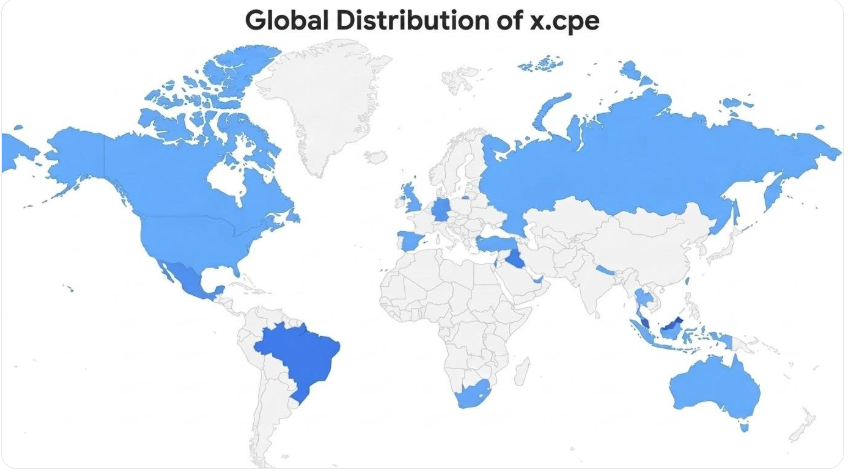
The overwhelming majority of the infected devices in the X.CPE botnet are Android TV set-top boxes, Google said, adding that they observed a number of other infected Android-based IoT devices, including telehealth devices, karaoke machines…
Large language model hijacking attacks, also known as LLMjacking, are generating large fraudulent cloud charges, with some organizations losing more than $100,000 per day.
North Korean attackers "combined a range of techniques, including social engineering by fake recruitment interviews," Binance said about the multibillion-dollar crypto heist it discovered in October.
Google said today it worked with industry partners to dismantle a botnet made up of more than 1.3 million Android TV set-top boxes that ship with malicious software which secretly rents the user's Internet connection out to strangers and…
Google and industry partners have dismantled the XCPE malware botnet consisting of more than 1.3 million Android TV streaming TV boxes that Google says its manufacturer intentionally infected with malware to generate revenue through…
A security researcher has released a proof-of-concept exploit for a recently patched Android vulnerability, dubbed "SMS of Death" and tracked as CVE-2026-58882, that lets attackers remotely disrupt cellular service or crash phones by…
AI-generated vulnerability reports are overwhelming some bug bounty programs, making it harder for aspiring security researchers to know where to start. TryHackMe explains how beginners can build practical cybersecurity skills, use AI…
The DOJ’s Executive Office for U.S. Trustees said a consumer privacy ombudsman is needed to advise the court on how to regulate what data from Character.AI can be sold and under what terms.
A massive search-hijacking campaign involving 319 Chrome extensions with a combined 13.4 million reported installations redirected users' searches through tracking servers to generate advertising revenue from Bing and Yahoo.
AI agents can control authenticated browsers, interact with corporate applications, and access sensitive data while appearing to act as legitimate employees. Keep Aware examines three ways agents operate inside browsers and why traditional…
Noyb alleges the platform in some cases records freelancers’ mouse clicks and keystrokes every few seconds and claims the collected information can be used to generate video documenting freelancers’ entire workday.
PHP2Shell shows how quickly attackers can exploit critical vulnerabilities, often before organizations have time to patch. Token Security explains why limiting the access of service accounts, API keys, and AI agents is just as important as…
On Tuesday, the US Cybersecurity and Infrastructure Security Agency (CISA) confirmed that hackers have begun exploiting a critical Brotli vulnerability known as Node2Shell, Broccoli2Shell, and HTTP2Shell.
A credit card skimming group reportedly compromised a shared analytics script used by e-commerce platform Convertr to steal shoppers' payment data during checkout.
Microsoft has released out-of-band (OOB) Windows updates to remove trust in certificates tied to compromised eMudhra certificate authority keys, protecting systems that do not receive automatic certificate trust updates.
A critical flaw dubbed 'HTTP2Shell' in Brotli, the C decoder library built into Node.js, could allow attackers to corrupt memory and access sensitive data.
Microsoft released emergency .NET security updates to patch a critical vulnerability known as Broccoli2Shell, also tracked as Node2Shell and HTTP2Shell.
A new NIST, CISA, and NSA guide treats runaway agents as incidents to be rehearsed. The hard part of the response is answering whose authority the agent used, and that answer has to exist before the incident does.
LiteLLM, an open-source tool widely used by artificial intelligence developers, said a key accidentally exposed in May was behind a supply-chain attack that is believed to have hit tens of thousands of users last week.
A new UEFI bootkit named BlackX, deployed in an espionage campaign in early 2026, exploited the old Baton Drop vulnerability to bypass Secure Boot and load a malicious driver designed to interfere with security solutions from Kaspersky and…
Hackers compromised the LiteLLM project's PyPI package and published malicious Docker images with a payload that steals credentials, secrets, and environment variables.
The issue was publicized by cybersecurity researcher Scott Helme, who published a blog saying that instead of a random 384-bit number, one of the company's private keys was just the number four.
A Chinese government-aligned hacking group used automated tools to carry out the recent supply chain attack on IT management software company ConnectWise and is using the same techniques to try to compromise organizations around the globe…
Attackers can steal credentials and begin exfiltrating data within minutes, often before security teams can respond. Exaforce examines real-world attacks involving stolen GitHub tokens, malicious AI installers, and MFA phishing, explaining…
Chrome is getting new scam protections that use Gemini to detect deceptive websites and warn users when they copy suspicious commands from ClickFix attacks.
ClickFix attacks are surging as cybercriminals use fake AI installers, malicious search results, and trusted chatbot platforms to trick users into executing malware. Push Security examines how these attacks evade traditional defenses and…
Certificate authority eMudhra revoked eight compromised intermediate certificates after researchers found their private keys were so weak that anyone could recover them almost instantly and use them to forge trusted certificates for…
In an email, the Hong Kong-registered company confirmed to Recorded Future News that hackers repeatedly altered configuration files on its update servers between April and July, redirecting the software to download malware for minutes at a…
Some downloads of the Rank Math PRO WordPress plugin from the vendor's official website carried malware that planted hidden backdoors in a supply-chain attack last week.
ConnectWise initially said on Friday that it was investigating “attempts of unauthorized access associated with the ConnectWise Cloud Backup environment,” and confirmed such access on Saturday.
Hackers reportedly compromised AOMEI's servers to distribute malware through a built-in promotional feature in its backup software, briefly tampering with configuration files before restoring them to their original state to hide the…