Edward Snowden and the Internet We Thought We Had
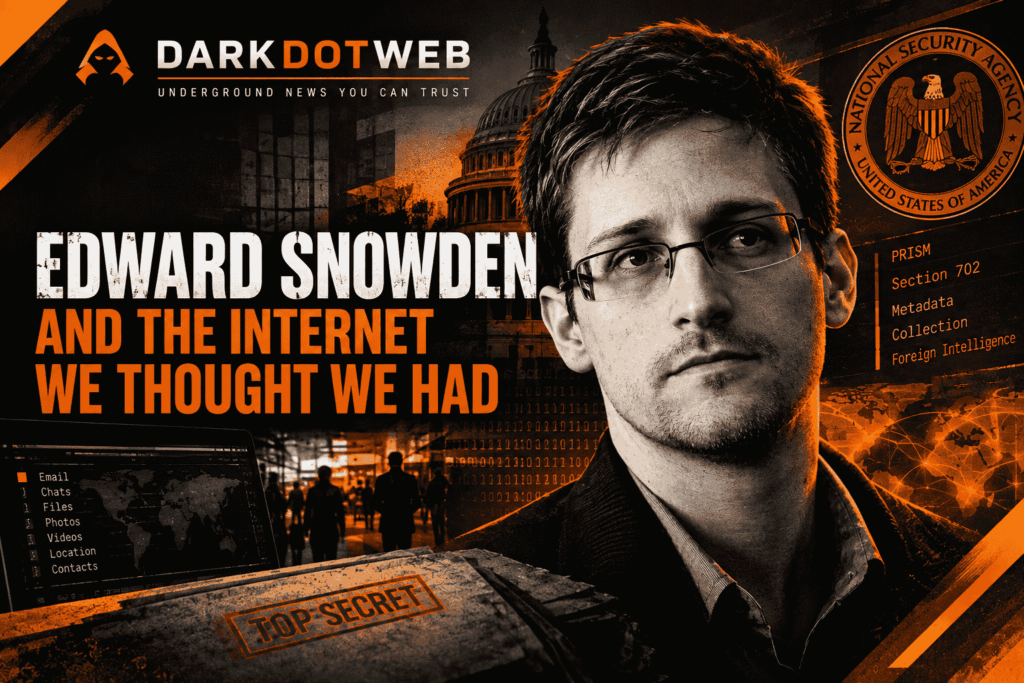
Edward Snowden changed how the world viewed surveillance, encryption and online privacy. More than a decade later, his disclosures still matter.
In 2013, most people did not think very much about how much of their online life could be monitored. People used email, searched Google, posted on social media, made phone calls and carried smartphones without necessarily thinking about where that information went, who could access it, or how much of it could be collected.
Privacy was often treated as something technical. Encryption was familiar to security researchers and more technically minded users, but it was far less prominent in mainstream public discussion than it would become. Then Edward Snowden provided journalists with a vast collection of classified documents detailing U.S. and allied surveillance programs.
What followed changed the public conversation about surveillance, encryption and online privacy. More than a decade later, the details of the Snowden disclosures can sometimes feel like history. But many of the questions they raised have not disappeared. In some ways, they have become even more relevant.
The contractor who became a whistleblower
Edward Snowden was working as an NSA contractor when he obtained classified information concerning U.S. intelligence and surveillance programs. He had also previously worked for the CIA.
In June 2013, The Guardian published the first major reports based on documents provided by Snowden. One of the earliest disclosures concerned an order requiring the production of telephone call-detail records, or telephony metadata. The records included information such as the telephone numbers involved in calls, unique identifiers, and the time and duration of calls. They did not contain the actual contents of the conversations.
Other disclosures soon followed, including material concerning the PRISM program and surveillance conducted under Section 702 of the Foreign Intelligence Surveillance Act.
The revelations prompted an immediate argument over two very different questions. The first was whether intelligence agencies had been given powers that the public did not properly understand. The second was whether Snowden’s decision to disclose classified material caused serious damage to intelligence operations and national security. Those two questions have remained intertwined ever since.
What Snowden actually revealed
One of the easiest ways to misunderstand the Snowden story is to reduce it to the idea that governments were simply “reading everyone’s messages.” The reality was considerably more complicated. The documents concerned multiple surveillance programs, different legal authorities and different forms of collection.
The telephone metadata program revealed in June 2013 was different from PRISM, which operated under Section 702. PRISM involved the collection of foreign-intelligence information from electronic communications service providers. Government testimony following the disclosures made clear that Section 702 collection could include the contents of communications involving targeted non-U.S. persons reasonably believed to be outside the United States.
Section 702 is designed to target non-U.S. persons reasonably believed to be outside the United States, rather than intentionally targeting U.S. persons or people known to be inside the country. Communications involving Americans can nevertheless be incidentally collected, with procedures governing how that information is handled.
The important point is that there was not one single surveillance system doing one thing. There were different programs operating under different authorities, with different targets, types of information and oversight mechanisms. For ordinary internet users, that was a difficult concept to process.
The internet suddenly looked different.
The metadata problem
One of the most important lessons from the Snowden disclosures was that information does not have to contain the actual contents of a conversation to reveal something about a person. Metadata can tell a story: who contacted whom, when they communicated, how frequently they communicated, where communications originated and which services were being used.
A single piece of metadata might appear relatively harmless. Large quantities of metadata can become much more revealing. This is one reason the Snowden story remains relevant to privacy discussions today.
People often say that they have nothing to hide because they are not discussing anything illegal. But privacy is not simply about hiding wrongdoing. A person’s contacts, movements, relationships and interests can reveal parts of their life that they may reasonably expect to remain private.
The internet had made it possible to generate enormous amounts of this information automatically. Snowden made many people realise that privacy could not simply mean keeping the contents of a message secret.
The encryption conversation changed
Encryption did not begin with Snowden. Cryptographers, privacy advocates and security researchers had been working on encryption for decades. But the Snowden disclosures helped make surveillance and encryption much more prominent subjects in mainstream public discussion.
The revelations demonstrated why protecting communications could matter even when a person was not doing anything illegal. If communications can potentially be collected at scale, protecting the contents of those communications becomes more important.
That does not mean encryption makes someone anonymous. It does not. A properly encrypted message can protect its contents while other information surrounding the communication may remain visible.
This distinction is particularly important when discussing the dark web. Anonymity is not the same thing as privacy, and privacy is not the same thing as security.
The dark web learned a lesson too
For DarkDotWeb readers, this is where the Snowden story becomes particularly interesting. The dark web is often discussed as though anonymity is a switch. You are either anonymous or you are not.
Real life is considerably more complicated. A person can use Tor and still reveal information about themselves. A person can encrypt their messages and still expose identifying metadata. A person can use an anonymous username and then connect that username to a personal account somewhere else. A person can protect their communications while leaving other identifying traces behind.
Snowden’s disclosures helped bring wider attention to exactly this kind of problem. Privacy is not one technology. It is a collection of decisions.
The same principle applies whether someone is a journalist communicating with a source, an activist communicating with colleagues, a business protecting confidential information or a person simply trying to keep their private life private.
What happened after Snowden?
The disclosures did not result in the end of government surveillance. They did, however, contribute to a much larger public and political debate about how surveillance should operate.
In the United States, that debate eventually contributed to legislative changes. The USA FREEDOM Act became law in June 2015. Among other changes, it ended the previous NSA bulk telephone metadata program under Section 215 and established a system in which the records remained with telecommunications providers, with government access subject to specific requests and legal procedures.
The change did not mean that surveillance itself ended. Other surveillance authorities remained in place, including Section 702, which continues to authorize targeted foreign-intelligence collection involving non-U.S. persons reasonably believed to be outside the United States.
That is an important part of the Snowden story because it is easy to look back at 2013 as though there was a single revelation followed by a single solution. There wasn’t. The argument simply moved forward.
Snowden himself became part of the story
Snowden’s personal situation also became inseparable from the disclosures. On June 14, 2013, the U.S. Department of Justice announced that Snowden had been charged with unauthorized disclosure of national defense information, unauthorized disclosure of classified communications intelligence, and theft of government property. The charges were brought under federal statutes including provisions of the Espionage Act.
Snowden left Hong Kong and eventually remained in Russia, where he was granted legal residency. In September 2022, Russian President Vladimir Putin granted Snowden Russian citizenship. At the time, the U.S. State Department said it was not aware of any change in his U.S. citizenship status. Snowden had previously said that he sought Russian citizenship while retaining his U.S. citizenship.
In 2025, an investigation by RFE/RL found that Snowden was registered with a Russian taxpayer identification number. The investigation also noted that it was unclear whether he had actually paid Russian taxes.
But his current legal and personal situation is not really the reason the Snowden story continues to matter. The bigger question is what the public learned from the documents he disclosed.
Hero or traitor?
The argument over Snowden is often reduced to two words: hero and traitor. Neither label adequately explains the entire debate.
Supporters have argued that Snowden exposed surveillance programs that the public had a legitimate interest in understanding. Critics, including U.S. government and intelligence officials, have argued that his unauthorized disclosure of classified information caused serious damage to national security.
Those competing arguments are part of the historical record. The disclosures also generated substantial public and congressional scrutiny of surveillance practices and contributed to changes in U.S. surveillance law.
The public can debate whether Snowden’s decision was justified without pretending that the consequences were simple. That complexity is worth preserving.
The privacy lesson that survived
Perhaps the biggest legacy of the Snowden disclosures is not any individual surveillance program. It is the change in how people think about privacy.
The internet had created an environment where enormous amounts of information could be generated without users actively thinking about it. Search histories, location information, contact lists, browsing habits, messages, emails, photographs, login records, payment information, device identifiers and social connections can all become part of a much larger picture.
None of these things necessarily look important on their own. Together, they can create a remarkably detailed picture of someone’s life.
Snowden did not invent this problem. But his disclosures made the scale and nature of government surveillance much harder for the public to ignore.
And technology has only continued to produce more data since 2013. Smartphones have become more deeply integrated into everyday life. Cloud services hold enormous amounts of personal information. Companies collect detailed behavioural data. New technologies can analyse information at a scale that would have been difficult for ordinary users to imagine when the Snowden story broke.
That makes the original lesson more relevant, not less.
Privacy is not about having something to hide
One of the most persistent responses to privacy concerns is simple: “I have nothing to hide.”
But privacy has never been exclusively about hiding crimes. People close doors. They use curtains. They have private conversations. They keep medical information confidential. They choose which parts of their lives to share with friends and which parts remain personal.
The digital world did not remove that need. It simply made privacy much harder to understand.
Snowden forced millions of people to confront a question that had previously seemed abstract: how much of our lives should other people be able to see simply because technology makes it possible?
There is no single answer to that question. Governments have legitimate interests in preventing terrorism and serious crime. Intelligence agencies have legitimate reasons to protect sources and investigate threats.
At the same time, surveillance powers can affect privacy and civil liberties, and democratic societies have to determine what safeguards, oversight and legal limits should apply. Those competing interests are not going away.
Neither is the need for privacy.
More than thirteen years after the first Snowden disclosures, the internet has changed considerably. The basic problem he exposed has not.
We still live much of our lives through systems that collect information about us. We still rely on companies and governments to handle that information responsibly. And we still have to decide how much privacy we are willing to exchange for convenience, security and connectivity.
The biggest lesson from Snowden may therefore have little to do with Snowden himself.
It is that privacy is not something that exists automatically. It has to be understood. It has to be protected.
And once information exists somewhere, people have to ask who can access it, why they can access it, and what happens when the answer changes.
That is a question the internet has not finished answering.
References in this story
- Edward Snowden - Wikipedia en.wikipedia.org