Not Everyone Involved in Drugs Is a Monster
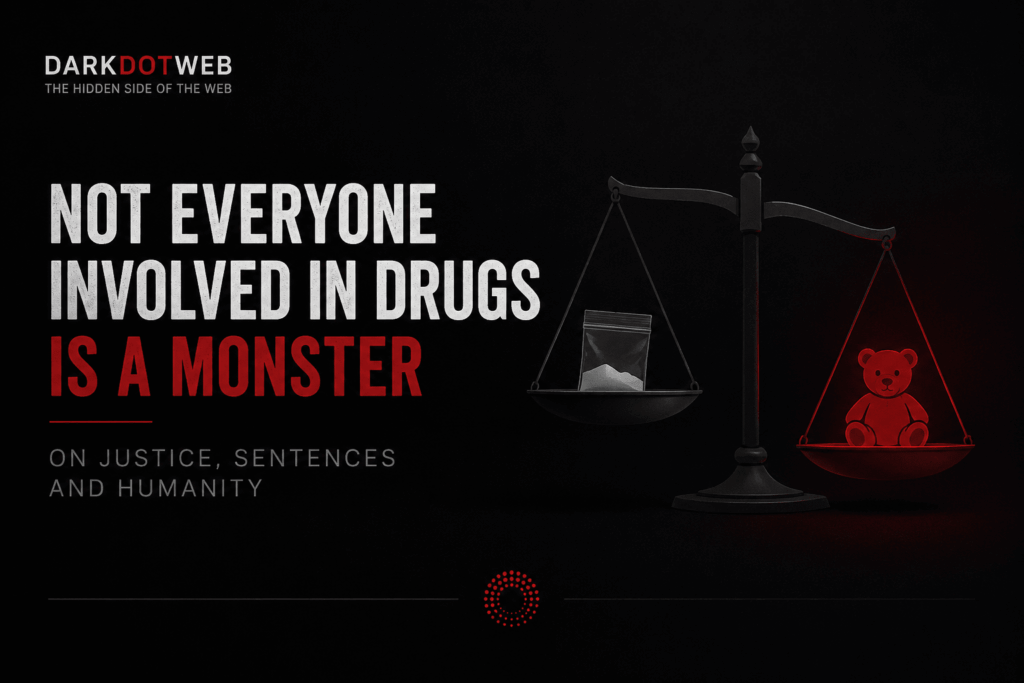
Why I believe not everyone involved in drugs should be treated as a monster, and why some criminal sentences raise serious questions about justice and proportionality.
Not Everyone Involved in Drugs Is a Monster: Rethinking Crime and Punishment
I’ve been thinking about writing this for a while, but what finally pushed me to actually sit down and write it was reading article after article about sentencing.
I’d come across cases involving predators who had committed absolutely horrific crimes and then see the sentence they received. Sometimes a few years.
Then I’d read about someone involved in selling relatively small amounts of drugs receiving seven, ten, or even fifteen years.
And I’d sit there thinking:
What the fuck is going on here?
Honestly, sometimes I think the judicial system is fucked up.
I’m not saying every predator gets a light sentence. I’m not saying every drug dealer gets a huge sentence. And obviously, sentencing depends on the country, the exact offense, previous convictions, plea deals and all sorts of other circumstances.
But when you repeatedly see examples where the punishment seems completely disconnected from the harm caused, I think we’re allowed to question the system.
And that’s what got me thinking about this article. Because the more I thought about it, the more I realized that I don’t actually see people involved in drugs the way a lot of society seems to.
I’m not against people selling drugs.
And I’m certainly not going to sit here and call everyone involved in the drug scene a criminal or a bad person.
I know too many people for that.
I’ve spoken to admins. I’ve spoken to vendors. I’ve spoken to users. I’ve spoken to people running services around the ecosystem.
And one thing I’ve learned is that you can’t look at someone’s role and immediately know what kind of person they are.
A username doesn’t tell you someone’s character. A job doesn’t tell you someone’s character. And the fact that someone makes money selling drugs doesn’t automatically tell me they’re a terrible human being.
I Don’t Judge Someone Just Because They Sell Drugs
If someone decides that selling drugs is how they’re going to make an income, support their family, pay their bills, or simply make a living, I’m not automatically going to condemn them.
That’s just not how I see people.
You can tell me it’s illegal. I know. But legality and morality aren’t always the exact same thing.
There are plenty of things that are legal that I personally find morally questionable, and there are things that are illegal that I don’t necessarily consider someone morally evil for doing.
So when I meet someone involved in selling drugs, I don’t immediately think:
“This person is a criminal.” I think: “Okay. This is what this person does.”
Then I judge them based on how they treat other people. That’s a much better indicator of someone’s character to me.
There Are Lines I Absolutely Wouldn’t Cross
Not having a problem with drug dealing doesn’t mean I have no limits. I absolutely do.
For example, knowingly putting fentanyl into another drug and hiding that from the person buying it is something I find completely unacceptable.
If someone deliberately makes their product more dangerous and doesn’t tell their customers, they’re putting another person’s life at risk without that person’s knowledge.
That’s not something I can get behind. And if they’re doing it deliberately because it makes them more money? That’s outrageous and down right insane.
There’s a huge difference between selling something that another adult has chosen to buy and deliberately deceiving that person about what they’re actually receiving.
Intent matters. A lot.
Accidental contamination is obviously a different situation from someone knowingly adulterating a product and concealing it. I’m talking about the latter.
The Same Goes for Violence and Exploitation
I also have very little sympathy for people who use violence, threats or coercion against others. If someone sells drugs and treats their customers fairly, that’s one thing.
If someone sells drugs and starts beating people, threatening families, kidnapping people, or murdering people because they want more money or control, that’s something completely different.
Again, it’s not the drug that changes my opinion. It’s the behavior.
The same applies to exploiting vulnerable people. I don’t care whether someone is selling drugs, running a business, working in an office or doing anything else.
If you’re deliberately exploiting people who are vulnerable, I have a problem with you.
And Then There Are Predators
This is where I think the difference becomes enormous.
There are people who participate in illegal markets. There are people who sell things that governments have decided shouldn’t be sold. There are people who operate outside the law. And then there are people who deliberately seek out vulnerable human beings because they want to exploit them.
I don’t put those things in the same category. Especially when children are involved. Someone who deliberately sexually exploits a child isn’t simply somebody who broke a law.
They’re a predator. There is an actual victim behind what they’ve done. An actual child scarred and traumatized for life.
A real person whose vulnerability was deliberately targeted. And that’s why I find it difficult when people try to flatten every form of criminality into the same category.
This Is Where Prison Sentences Really Bother Me
And this is probably the part that got me thinking about this whole subject in the first place.
How is it that someone involved in relatively small-scale drug dealing can sometimes receive seven, ten, or fifteen years in prison…
…while someone convicted of an extraordinarily disturbing predatory crime can sometimes receive a sentence of only a few years?
I’m not saying that happens in every country. I’m not saying every drug seller gets a huge sentence. And I’m certainly not saying every predator receives a light sentence.
Obviously, individual cases are complicated. But when those extremes happen, I think we’re allowed to ask questions.
Because honestly, sometimes I look at a sentence and think: What exactly are we trying to achieve here?
Is the purpose punishment? Deterrence? Rehabilitation? Protecting society?
Because if it’s all of those things, then surely proportionality has to matter.
I’m Not Saying One Victim Matters More.
I want to make that very clear. I’m not comparing victims. I’m not saying families affected by drugs don’t matter. They absolutely do.
I’m saying that different actions can involve very different forms of responsibility.
Someone selling drugs isn’t automatically responsible for every decision another adult makes after buying them. That’s an uncomfortable thing to say, but I believe it’s true.
If an adult knowingly chooses to buy and consume a substance, there is personal responsibility involved too. That doesn’t mean suppliers have no responsibility.
If someone knowingly sells contaminated or deliberately adulterated drugs, that’s different. If someone uses violence or deception, that’s different.
Context matters.
I Don’t Believe a Dark-Web Username Tells You Who Someone Is
This is something I’ve learned from the people I’ve encountered.
You can have someone with a reputation for being involved in something illegal who is actually respectful, honest, helpful and decent to the people around them.
And you can have someone who looks completely respectable on the surface who turns out to be an absolute monster.
A username doesn’t tell you someone’s character. A profession doesn’t tell you someone’s character.
And a criminal record doesn’t necessarily tell you everything about someone’s character either. People are more complicated than that. That’s why I don’t like automatically calling everyone involved in drugs a “criminal.”
Maybe technically they have broken a law. But I don’t think that word tells me enough about the person to make a judgment about who they are.
What Actually Matters to Me
If I had to reduce my entire opinion down to a few things, it would be this:
How do you treat people?
Do you lie to them?
Do you exploit them?
Do you threaten them?
Do you use violence?
Do you deliberately put their life at risk?
Do you target people who can’t protect themselves?
Or are you simply providing something that another adult has chosen to buy?
Those questions tell me far more about a person than whether the government has decided their particular activity is legal.
And yes, I realize that’s an opinion that some people won’t like. That’s okay. I’m not writing this because I expect everyone to agree with me.
I’m writing it because I think we sometimes make the mistake of believing that illegal automatically means evil. I don’t believe that.
And I definitely don’t believe that everyone involved in the drug or dark-web ecosystem should automatically be labelled a criminal or a bad person.
I’ve met too many people who don’t fit that description.
Maybe We Should Judge People by Their Actions
I don’t care if someone sells drugs. I care if they deliberately hurt people.
I don’t care if someone makes money from an illegal market. I care if they use violence, deception or exploitation to do it.
And I have absolutely no problem drawing a very hard line when someone deliberately preys upon vulnerable people, especially children.
Those things aren’t the same. They shouldn’t be treated as though they’re the same.
And when we start handing out prison sentences, I think those distinctions should matter enormously.
Because if someone is going to lose years of their life because of something they did, I’d like to believe the punishment actually reflects what they did, who they harmed, and how deliberately they did it.
Maybe that’s controversial.
But I’d rather have an honest conversation about it than pretend every person involved in drugs or the dark web is automatically a monster.
People are more complicated than their labels.
During my time working on DarkDotWeb, I’ve read thousands upon thousands of articles about drugs, crime, arrests and court cases. So many times, I’d finish reading one and think to myself, “This isn’t right.”
After seeing the difference between some drug-related sentences and sentences handed down for far more predatory crimes, I finally felt like writing down what I’ve been thinking.