10 Harm Reduction Mistakes People Make Without Realizing It
Learn about 10 common harm reduction mistakes, from using alone and mixing substances to ignoring warning signs, tolerance changes, and overdose risks.
The 10 Harm Reduction Mistakes People Make Without Realizing It
Harm reduction is not about pretending drug use is safe. It is about recognizing that people use drugs, that risks exist, and that some of those risks can be reduced.
Yet many of the most serious problems don’t necessarily come from people deliberately taking unnecessary risks. Sometimes they come from simple assumptions:
“I’ve taken this before.”
“I know what I’m getting.”
“I’ll be fine.”
“I don’t need to worry about that.”
Those assumptions can become dangerous very quickly.
Here are ten common harm-reduction mistakes people make without necessarily realizing they are mistakes.
Using Alone
One of the biggest risks is also one of the easiest to overlook: being alone.
If someone experiences an overdose, severe reaction, loss of consciousness, seizure, or another medical emergency while alone, there may be nobody there to recognize what is happening or call for help.
This is particularly important when opioids may be involved, but the principle applies more broadly. A serious medical emergency can happen with many different substances.
If someone is going to use despite the risks, having another person nearby who can recognize an emergency and seek help can make an enormous difference.
For people who are going to be alone, knowing in advance what emergency resources are available in their area is especially important.
Mixing Substances Without Understanding the Risks
Polydrug use is extremely common, and it is also one of the areas where risks can increase dramatically.
Combining substances isn’t simply a matter of adding their individual effects together. Some combinations can amplify particular dangers.
For example, combining multiple central nervous system depressants can increase the risk of dangerous sedation and respiratory depression. Combining stimulants can place additional strain on the cardiovascular system. Other combinations can create different risks altogether.
Alcohol is particularly easy to overlook because it is legal and socially normalized, but it remains a psychoactive drug and can interact dangerously with other substances.
The safest option is not to combine drugs. But if someone is going to use multiple substances, understanding that combinations can behave differently from either substance on its own is an important part of harm reduction.
Assuming Your Tolerance Hasn’t Changed
Tolerance is not permanent.
Someone who previously used a particular substance regularly may assume that the amount they were accustomed to remains appropriate after taking a break.
It may not.
Tolerance can decrease after periods of abstinence, meaning that returning to a previously familiar level of use can carry substantially greater risk.
This is particularly important with opioids, where loss of tolerance can contribute to fatal overdoses after periods away from use.
The same general principle applies elsewhere: past experience does not guarantee present safety.
A person’s tolerance can change because of breaks from use, changes in health, interactions with medications or other substances, and many other factors.
Redosing Too Quickly
Another common mistake is assuming that because something hasn’t produced the expected effect yet, taking more will solve the problem.
Depending on the substance and route of administration, effects may take time to develop. Taking additional amounts before the initial dose has fully taken effect can result in unexpectedly high total exposure.
This can be particularly dangerous with substances whose effects are delayed or prolonged.
The problem is that once additional doses have been taken, there is no easy way to undo them.
Patience can therefore be an important harm-reduction tool.
If the effects are taking longer than expected, that does not necessarily mean that nothing is happening.
Trusting Appearance, Packaging, or Reputation
A substance can look exactly like what someone expects and still contain something unexpected.
Packaging, logos, crystals, tablets, powders, colours, smells and even a trusted source cannot reliably establish the chemical contents of a substance.
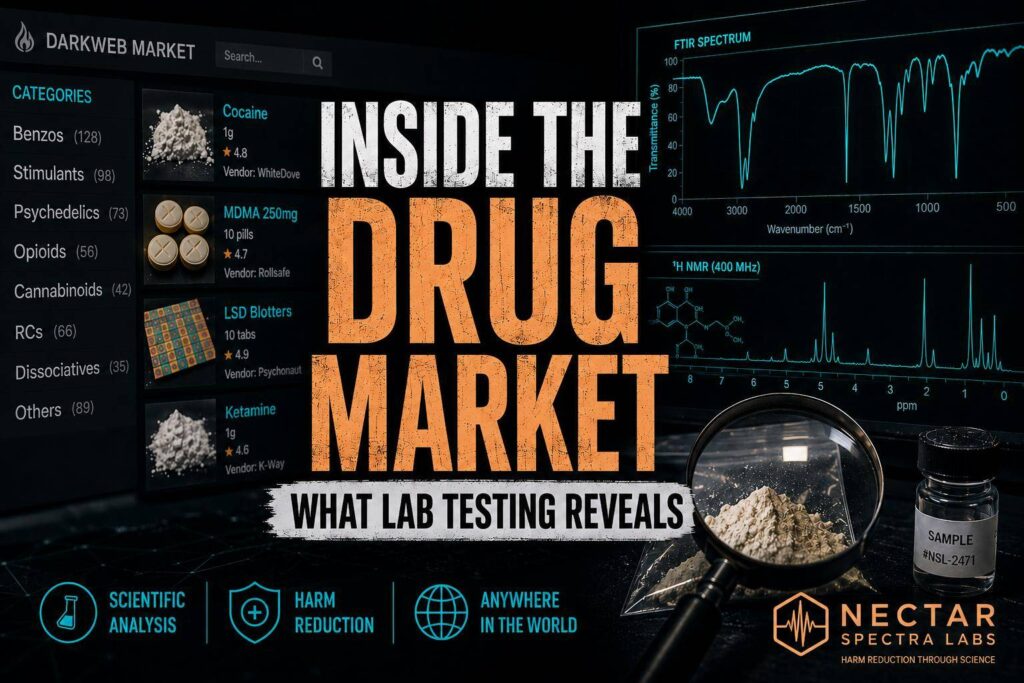
This is one reason drug checking and reagent testing can be valuable harm-reduction tools where they are legally available.
Testing cannot make drug use safe, and no test provides an absolute guarantee about every possible contaminant or concentration. But obtaining information about what a substance may contain is generally better than relying entirely on appearance or assumptions.
A particularly dangerous assumption is:
“I’ve bought from this source before, so I know what this is.”
Previous experience does not guarantee that today’s substance is identical to yesterday’s.
Not Having Naloxone Available When Opioids May Be Involved
Naloxone can temporarily reverse an opioid overdose and can give someone valuable time while emergency medical assistance is obtained.
If opioids are being used or there is a realistic possibility that an unknown substance could contain an opioid having naloxone accessible can be an important safety measure.
People should also understand the signs of an opioid overdose.
These can include being unable to wake someone, very slow or stopped breathing, unusual snoring or gurgling sounds, and pale, blue or grey skin or lips.
When an opioid overdose is suspected, naloxone should be administered according to the product instructions and emergency medical help should be sought.
Naloxone is not a substitute for emergency care. Its effects can wear off while opioids remain in the body.
Ignoring Heat, Hydration, and Physical Warning Signs
Not every drug-related emergency is an overdose.
Stimulants and some other substances can contribute to overheating, dehydration, cardiovascular problems, agitation and other medical emergencies.
Environmental conditions matter too. Hot weather, crowded environments, physical exertion and prolonged activity can all increase the strain on the body.
At the same time, simply drinking enormous quantities of water is not a solution. Excessive water consumption can itself be dangerous.
The important lesson is to pay attention to what the body is telling you.
Severe overheating, chest pain, difficulty breathing, fainting, severe confusion, seizures, or rapidly worsening symptoms are not things to simply “push through.”
When something feels seriously wrong, seeking medical assistance is more important than worrying about embarrassment or judgment.
Sharing or Reusing Equipment
Sharing injecting equipment can transmit blood-borne infections, including HIV and hepatitis C.
But harm reduction isn’t limited to injection equipment.
Sharing items that come into contact with blood or bodily fluids can create unnecessary risks, and damaged or contaminated equipment can introduce infections or injuries.
Using new, sterile equipment where possible and avoiding sharing equipment reduces these risks.
People who inject drugs should also know where local needle and syringe programs, drug-checking services and other harm-reduction services are available.
These services exist to reduce preventable harm, not to judge the people using them.
Ignoring Warning Signs Because “I’ve Done This Before”
Familiarity can create a false sense of security.
Someone may have used the same substance many times without experiencing a serious problem and conclude that they understand exactly how their body will react.
But circumstances change.
The substance may be different. Its strength may be different. A person’s tolerance may have changed. They may be dehydrated, sleep-deprived, ill, taking medication, or have consumed another substance.
Even the same person can have very different reactions at different times.
Previous experience is useful information, but it should never be treated as a guarantee.
If something feels significantly different from previous experiences, that difference should be taken seriously.
Not Knowing What to Do When Something Goes Wrong
Perhaps the most overlooked form of harm reduction is simply having a plan for an emergency.
People don’t need to be medical professionals to recognize that something is seriously wrong.
Knowing the basic warning signs of an overdose or medical emergency, knowing where naloxone is located, knowing how to contact emergency services, and being willing to call for help can all make a difference.
One particularly dangerous mistake is delaying medical assistance because someone is afraid of getting into trouble.
A medical emergency is a medical emergency.
If someone is unconscious, having difficulty breathing, experiencing a seizure, severely overheated, suffering chest pain, or otherwise deteriorating rapidly, seeking professional medical assistance should take priority.
Harm Reduction Starts With Questioning Assumptions
Many harm-reduction mistakes come down to one thing: assuming that because something was fine before, it will be fine again.
But drug-related risks are affected by countless variables.
Tolerance changes. Drugs vary in strength and composition. People combine substances. Health conditions change. Environments change. And sometimes things simply don’t go according to plan.
Harm reduction cannot eliminate those risks. What it can do is reduce the number of preventable tragedies.
Carry naloxone when opioids may be involved. Avoid mixing substances when possible. Don’t assume that a familiar-looking substance is necessarily what you think it is. Take changes in tolerance seriously. Pay attention to warning signs. Don’t be afraid to seek medical help.
Most importantly, don’t confuse having done something before with knowing that it is safe.
Harm reduction is about making better decisions with the information available.
And sometimes, the decision that saves a life is simply recognizing that something is wrong and acting before it is too late.