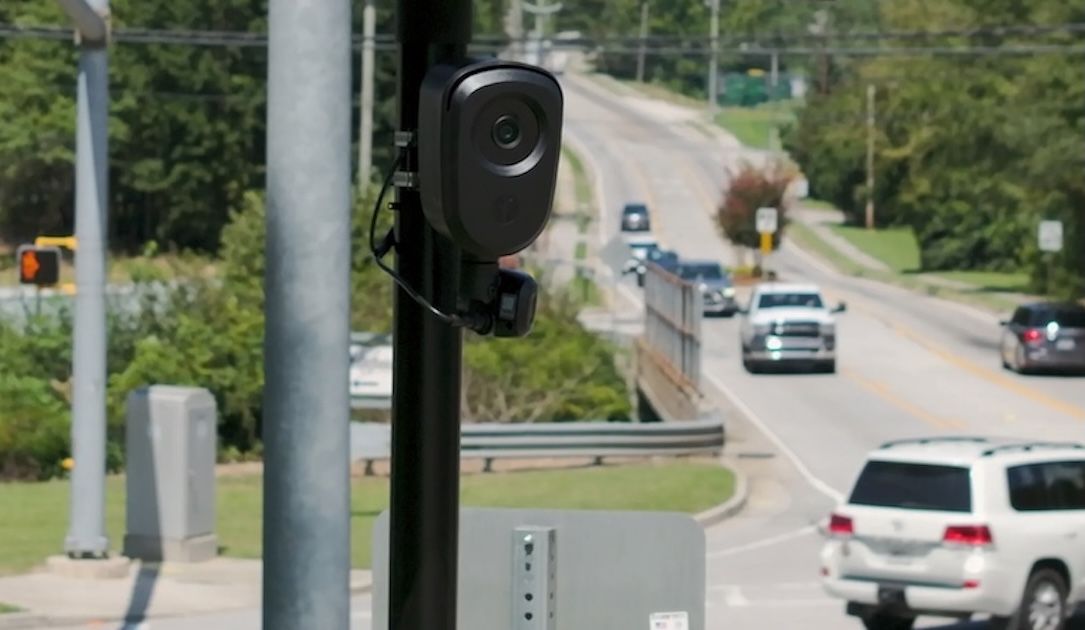
Flock camera use by internal affairs unit puts DC police at odds with officers’ union

Flock automated license plate recognition cameras are under fire from the Washington, D.C., police department’s union after it discovered Internal Affairs investigators used the controversial technology to track the whereabouts of sworn officers without their knowledge.
There are no known prior cases of police departments deploying Flock ALPRs to monitor their own personnel, privacy advocates say.
Washington’s Metropolitan Police Department (MPD) defended the practice, saying in a statement that its “position is that the use of LPR in the misconduct investigation was appropriate.”
Union officials learned in July that the department had been using Flock to track officers under investigation, according to a September 10 press release from DC Police Union President Gregg Pemberton.
The MPD has not established or enforced controls for a system as “powerful” as Flock’s, the union said.
"A system with such broad and extensive capabilities requires not only significant guardrails but also full transparency with the public,” Pemberton, a high-ranking detective, said. “The MPD has provided neither.”
The union filed a complaint and insisted the MPD stop using Flock to track officers.
Management denied the complaint and refused to probe managers involved in the searches, the union said.
The same day the grievance was denied, the MPD issued “a new teletype restricting department-wide access,” according to the union.
The MPD declined to comment about the alleged new restrictions and the timing for when they were issued. Its statement said the dispute between the department and the union is headed to arbitration.
Beyond the Internal Affairs use, Pemberton told the Washington Post the union has “a lot of concerns about whether or not there’s a constitutional question that needs to be addressed” regarding Flock deployment in general.
“Once you start to understand the capabilities of this system, even the proponents of it say there needs to be more public discussion and probably more legislation on it,” he said.
National backlash
The feud in Washington comes at a time when Flock is facing intense scrutiny nationwide amid numerous instances of cops using the ALPRs to stalk people.
Austin, Texas, police stopped using Flock under pressure from residents in June 2025. Several other cities followed its lead, including Cambridge, Massachusetts; Evanston, Illinois; and Eugene, Oregon.
The state governments of Texas and Florida announced significant new restrictions on Flock usage in late August and early September.
More notably, an analysis by the digital rights nonprofit Secure Justice found that more than 90 U.S. cities and counties stopped working with Flock in the month of August alone. Since 2021, the nonprofit has found more than 200 terminated contracts, meaning nearly half of the departments ending their relationships with Flock did so in the past six weeks.
A spokesperson for Flock did not respond to a request for comment.
'Strong enthusiasm against Flock'
The DC Police Union’s press release said one of its concerns is that “the full capabilities of this system remain unknown.”
“Public trust cannot be built through secrecy about this technology, and officer trust cannot be built by tightening rules on the rank and file while refusing to investigate the officials who abuse the system,” Pemberton said.
The union is now assessing additional challenges it might bring to reform how the department handles Flock data access and appropriate use cases. The department must mandate the same justification, logging and audit rules are applied to officers at every rank, the union press release said.
Privacy advocates say the union’s comments are striking and emblematic of the increasing public concern over Flock’s mass surveillance capabilities.
“I've never seen a rank and file [police] union like this vociferously calling to say the power police have needs to be rolled back,” said Jake Laperruque, a surveillance expert at the Center for Democracy and Technology. “It really speaks to how strong the enthusiasm against Flock is that… even police in a major department are saying we should not have these powers.”
The DC Council is also taking note. On September 14, Councilmember Brooke Pinto, who is chairwoman of the Judiciary and Public Safety Committee, wrote a letter to MPD Interim Chief Jeffery Carroll asking for answers to 10 questions about how the department uses Flock data and why it needs the technology at all.
“Security and privacy are fundamental rights for our residents — we must always balance the dual important duties of our government to protect the public’s safety and to safeguard our civil liberties,” Pinto said in a statement. “The public deserves transparency and must understand how this technology is being used in our communities.”
References in this story
- Scott Taylor (@ScottTaylorTV) on X x.com NEW: DC Police Union raises concerns about MPD’s use of license-plate reader/Flock technology. Union President Gregg Pemberton says the technology can be a legitimate investigative tool but argues @DCPoliceDept has…
- Where the backlash against Flock Safety is having the biggest impact therecord.media Two populous states and two large cities are among the U.S. jurisdictions where leaders have taken direct action to address criticisms of automated license plate readers (ALPRs).
- Cities reverse course on automated license plate reader cameras amid privacy concerns therecord.media The move by cities to halt their work with Flock follows reports that the company shared data from local partners with federal immigration authorities.
- Flock cameras remained active in two cities where officials had asked for them to be turned off therecord.media Officials in Cambridge, Massachusetts, and Eugene, Oregon, found that some Flock Safety license plate readers were still active after the municipalities asked for services to be terminated.
- Advanced Cyber Threat Intelligence | Recorded Future www.recordedfuture.com Get real-time, actionable cyber threat intelligence with Recorded Future. Mitigate cyber risks, prioritize threats, and proactively secure your organization.
- Advanced Cyber Threat Intelligence | Recorded Future www.recordedfuture.com Get real-time, actionable cyber threat intelligence with Recorded Future. Mitigate cyber risks, prioritize threats, and proactively secure your organization.
- Suzanne Smalley (@suzannesmalley.bsky.social) bsky.app Reporter covering digital privacy and cybersecurity policy for The Record. Mom. Pub trivia queen. Crossword enthusiast. Literary fiction connoisseur. Idiosyncratic. Signal: Suzanne.236 Email…