EU chief wants joint response to cyberattacks, sabotage
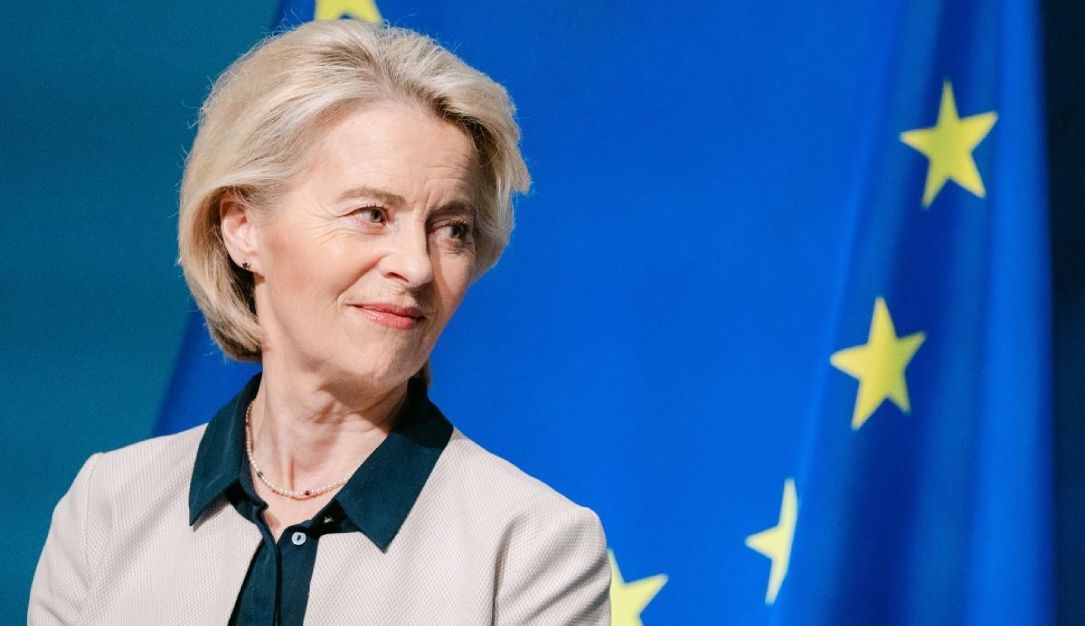
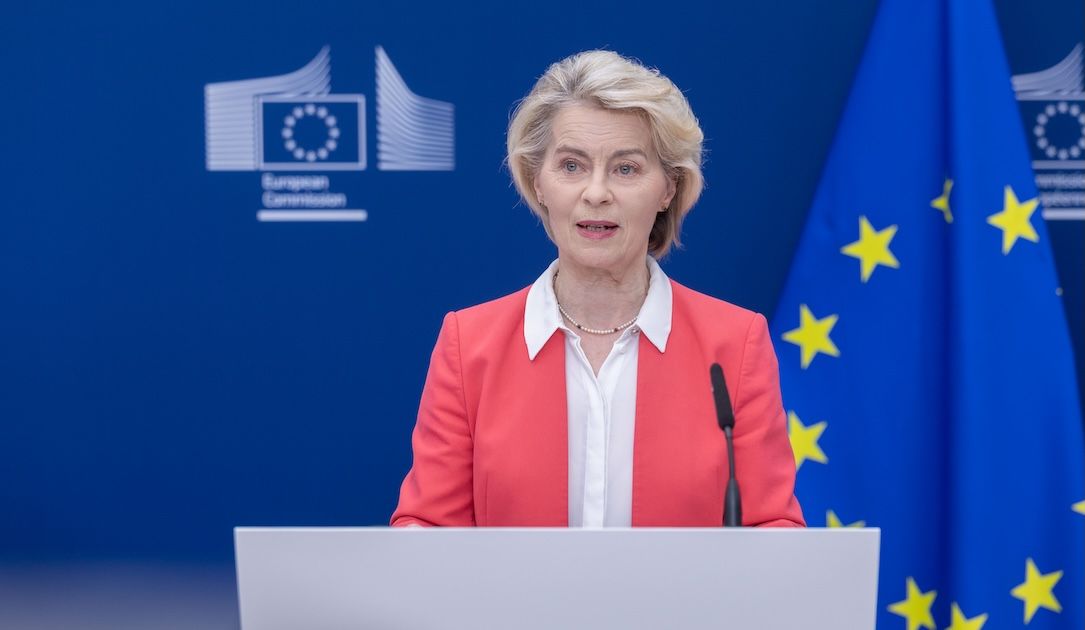
European Commission President Ursula von der Leyen proposed on Wednesday an emergency mechanism allowing any EU country to summon the bloc’s governments in response to security threats including sabotage, cyberattacks and drone incursions.
Delivering her annual State of the Union address in Strasbourg, Von der Leyen said threats were “mounting on our soil,” pointing to recent incidents in Denmark, Lithuania and Poland and an attempted drone attack in Leipzig.
“Cyberattacks and sabotage, arson and drone incursions” are “ramping up every day,” she said, arguing that the EU’s institutions and decision-making processes had failed to keep pace.
“Our systems were made for a different world,” she said. “They are driven by well-intentioned attempts at consensus and compromise. But we need to consider whether they are still fit for purpose.”
Von der Leyen said the Commission and the EU’s foreign policy chief, Kaja Kallas, would propose a new European security strategy, including what she called an Emergency Security Protocol.
Modelled on the North Atlantic Treaty’s Article 4, the mechanism could be triggered by a single member state, after which all 27 governments would convene to coordinate a European response, deter further escalation and limit the consequences of an incident.
NATO’s Article 4 allows members to consult when the territorial integrity, political independence or security of a member is threatened. It is distinct from Article 5, the alliance’s collective-defence clause.
The EU already has its own mutual-assistance provision, Article 42(7) of the Treaty on European Union, which France invoked after the Paris terrorist attacks in November 2015. It also has a separate solidarity clause under Article 222 of the Treaty on the Functioning of the European Union.
Von der Leyen’s proposal did not explain what would happen once governments have been brought together under this protocol.
Many decisions under the EU’s common foreign and security policy require unanimity, giving individual governments the ability to block measures supported by the other member states. EU sanctions are also adopted unanimously.
Von der Leyen did not say whether the proposed protocol would alter those decision-making rules, establish agreed responses in advance or simply provide a new framework for consultation.
The difficulty of reaching agreement surfaced again this week when EU ambassadors failed to approve the routine six-month renewal of sanctions on Russia.
France and Slovakia pressed for Russian-Uzbek billionaire Alisher Usmanov to be removed from the sanctions list, and governments instead agreed to extend the measures for seven days while negotiations continued.
Von der Leyen said Europe urgently needed agreement on how to respond to hostile acts that fall below the threshold of armed aggression but still threaten national security.
She described the distinction between conventional and hybrid threats as increasingly blurred, saying the threats facing Europe were becoming “less and less hybrid and less and less threats.”
The protocol was proposed as part of a wider series of security and defence initiatives announced in the speech.
Von der Leyen said the Commission would set out plans for a European Security Council, bringing EU leaders together with partners including Britain, Canada, Norway and Ukraine to discuss continental security.
She also announced a European Instrument for Strategic Enablers, intended to support capabilities including air and missile defence, strategic transport, air-to-air refuelling, space systems and cyber capabilities. She said the initiative would be aligned with NATO.
Further details are expected in the Commission’s forthcoming European security strategy, which had previously been due in the third quarter of 2026.
References in this story
- 2026 State of the Union Address by President von der Leyen ec.europa.eu President von der Leyen delivered the second State of the Union Address of the 2024–2029 Commission.
- The North Atlantic Treaty www.nato.int The Parties to this Treaty reaffirm their faith in the purposes and principles of the Charter of the United Nations and their desire to live in peace with all peoples and all governments. They are determined to…
- Advanced Cyber Threat Intelligence | Recorded Future www.recordedfuture.com Get real-time, actionable cyber threat intelligence with Recorded Future. Mitigate cyber risks, prioritize threats, and proactively secure your organization.
- Advanced Cyber Threat Intelligence | Recorded Future www.recordedfuture.com Get real-time, actionable cyber threat intelligence with Recorded Future. Mitigate cyber risks, prioritize threats, and proactively secure your organization.
- Alex Martin (@AlexMartin) on X twitter.com UK Editor: @TheRecord_Media | Fellowship alumnus: @VirtualRoutes | @SkyNews | Agent: @NorthbankTalent
- Alexander Martin (@alexmartin.bsky.social) bsky.app Journalist covering cybersecurity and intelligence. UK Editor at The Record from Recorded Future News. Dad of two. 🏠 Sheffield 📧 [email protected] 📱 Signal: AlexanderMartin.79